

The Story of the Land and its People
Ka‘anapali has a history as rich and bountiful as its land, water and sea. Ancient Hawaiian villages were alive with artistry and culture. Vast sugar plantations fostered tight-knit communities of workers' families. The sunny shores, views of three other islands and a stunning mountain backdrop lured tourists long before the world's first beach resort was built here. Indeed, where nature provides so much, people have grown and prospered with plenty of time to play.
The Birth of the Islands
At the northernmost corner of the Polynesian triangle, the Hawaiian Islands stand as a sentry for a collection of atolls, volcanic remnants, coral blocks and large islands that punctuate the region stretching to Aotearoa (New Zealand) in the south and Rapa Nui (Easter Island) in the east. Hawai‘i is the newest landmass in Polynesia and the most isolated settled area on the globe, rife with unique ecosystems.
Maui, sitting in the middle of the main Hawaiian island chain, is a geological youngster. Haleakala, still volcanically active in the 18th century, rises higher than 10,000 feet on the eastern end of the island.
The older and more eroded West Maui Mountains are 1.3 million years old. The tallest point at Pu‘u Kukui - 5,788 feet - is one of the rainiest spots on earth. Ka‘anapali sits in the leeward side of these mountains, on the slopes facing Lana‘i and Moloka‘i.
Mythical Origins
In their legends and chants, Hawaiians reveal sharp attention to nature and its workings. The Kumulipo creation chant describes the natural world and the first movements of life, naming every creature visible to the naked eye.
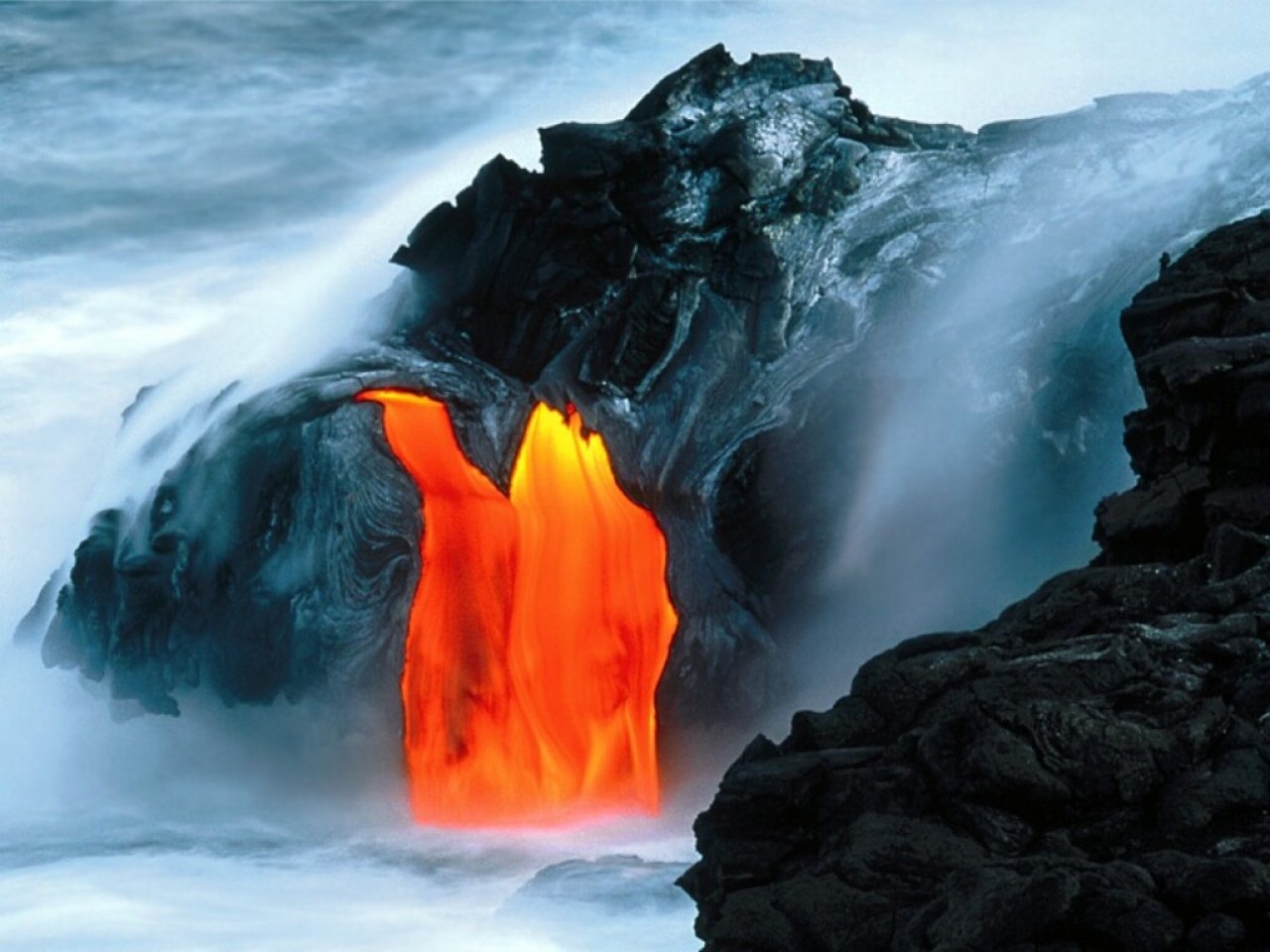
Hawaiians passed down their observations in stories. Their chants and mele depict a cosmos of invention and cyclical creation and renewal. They tell the story of their Islands being pulled up from the sea by the demi-god Maui, condensing geologic reality into a poetic version that applauded strength, bravery and perseverance. Other tales like those of Pele give narrative shape to volcanic eruptions, dusty craters, and black fields of rock.
Pele touched many places on Maui before making her permanent home at Kilauea on the island of Hawai‘i. On Maui, she buried her fire stick first at Pu‘u Keka‘a, just south of Ka‘anapali. Chased out by her sister Namakaokaha‘i, Pele left her footprint at Pu‘u Laina, not far away. She then found temporary shelter at Haleakala, but was eventually shut out there too. Maui's south shore last experienced Pele's wrath in the late 1700s when an eruption changed the coastline at what is now called La Perouse Bay.
Stories abound throughout the Ka‘anapali area. The Pohaku Moemoe, or Sleeping Stone, marks the adventures of Maui and his lazy friend, Moemoe. Industrious, ambitious Maui set off to snare the sun above Haleakala, ignoring Moemoe's advice to first rest and relax. After successfully slowing the sun, Maui helped his friend sleep peacefully forever by turning him to stone.
On the south side of Ka‘anapali, guardian spirits in the form of owls live at Ke Ana Pueo (Owl Cave). One of the spirits named Wahine Pe‘e saved the lives of innocents held for sacrifice at the temple. One day Wahine Pe‘e was hailed by a small girl who had seen her brother Ka‘ili dragged off to the temple by warriors. Wahine Pe‘e found Ka‘ili, untied him, and taught him to walk backwards to leave a false trail. Once the warriors learned of Ka‘ili's escape, they followed his footsteps but came to a dead end at the temple. Ka‘ili and his sister returned safely to their family. Pohaku Pe‘e stands near Pohaku Moemoe, holding the enduring spirit of Wahine Pe‘e.
In this part of the island, Pu‘u Keka‘a is also known as ‘uhanalele, or the soul-leaping place of Maui. It was here, at Black Rock, that chief Kahekili jumped into the sea, proving his bravery and ability to lead.
Ancient Life
Over centuries, Polynesian voyagers from the South Pacific settled on the various islands in two major waves of migration, bringing to Hawai‘i the older customs and beliefs of their homeland. The Polynesian society that eventually overlaid the islands grew in concert with the natural environment, developing a sophisticated system of stewardship and unmatched levels of culture and artistry.
Life on Maui, and in the Lahaina District - including the Ka‘anapali area - followed patterns of life on the other major islands. The land was divided for political and agricultural purposes into ahupua‘a or wedge-shaped districts that ran from the crest of the mountains to the sea. Within each ahupua‘a were forests for timber, land for growing crops, and streams and ocean for gathering fish and seafood. The ali‘i, or ruling class of chiefs, ruled the ahupua‘a through their konohiki or overseers, tending to the needs of the population and redistributing food and goods through a system of annual taxation.
Being on the sunnier and drier side of the island, Lahaina District was not as heavily populated as the wet windward side of the island. Small villages dotted the coast, linked together by the ala loa, or island-circling path built by Kiha-a-Pi‘ilani and his son Pi‘ilani in the early 1500s. The staple crop of the area was sweet potato, with wetland taro grown in valleys like Honokowai. It was also an excellent area for breadfruit, second only to Puna on Hawai‘i island. Fishing was a mainstay of coastal villages and the waters off Lahaina were the best fishing grounds in all of Maui.
Maui has a history of strong rulers. In the early 1700s, Kekaulike was chief. At his death, he passed his rule to his younger son, Kamehamehanui, angering his older son and presumed heir, Kauhi. Their battles to succeed Kekaulike were fought in Lahaina and Ka‘anapali and included ally warriors from O‘ahu and Hawai‘i. After Kauhi was captured and killed, Kamehamehanui resumed rule of the island.
Kahekili, Kamehamehanui's successor, was a fierce opponent of Kamehameha, the ruler of Hawai‘i who was first to unify the Islands. Like many previous Maui rulers, Kahekili laid claim to lands on Hawai‘i. In the end, he could not overcome Kamehameha's superior forces; he died in battle in 1794.
Thriving Hawaiian Community
Ka‘anapali has always been a place where families enjoyed living. Over centuries, Polynesian voyagers from the South Pacific settled on the various islands in two major waves of migration, bringing to Hawai‘i the customs and beliefs of their homeland. The Polynesian society that eventually overlaid the islands grew in concert with the natural environment, developing a sophisticated system of stewardship and unmatched levels of culture and artistry.
Bountiful Land, Water & Sea
The staple crop of the area was sweet potato, with wetland taro grown in valleys like Honokowai. It was also an excellent area for breadfruit, second only to Puna on Hawai‘i island. Fishing was a mainstay of coastal villages and the waters off Lahaina were the best fishing grounds in all of Maui.
Ancient Hawaiian Recreation
Living in a landscape and climate that supplied abundant food and materials for comfortable living without excessive labor, Hawaiians had ample leisure time. They were great sportsmen, inventing games and contests to entertain both players and spectators.
Hawai‘i Meets Western World
During Kamehameha's lifetime, the Islands experienced enormous social and political change. Frequent and fractious wars ended and during different periods, Kamehameha held court at Lahaina. The English navigator Captain Cook put the Islands in the world's consciousness through news of his death at Kealakekua and his published journals. The Frenchman La Perouse and his crew also broadcast impressions of the Islands and their inhabitants. Soon a steady stream of foreign ships was anchoring off Hawaii's shores, trading with Hawaiians and introducing Western goods and skills.
Kamehameha's death in 1819 was followed by other changes: the throwing off of the old Hawaiian religious traditions and the arrival of Protestant missionaries. On Maui, missionaries introduced literacy and Western education through local mission schools. They established Lahainaluna as a teacher's training college in 1831, and trained the first generations of Hawaiian scholars. Through their influence on Hawaiian ali‘i, they promoted the rule of law, principles of a constitutional monarchy, and the notion of private property.
The Sugar Industry and Pu‘ukoli'i Camp
Business and trade shaped the new era in Hawai‘i as much as Western theology. The first commodity Hawaiians cashed in on was sandalwood - prized by the Chinese - raiding their forests for profits. When sandalwood had run its course, the whaling industry pumped money into Hawaii's ports, especially Lahaina. Providing ship's stores boosted new ventures in agriculture, moving Hawaiians beyond subsistence farming to commercial cash crops.
One of the earliest crop ventures was coffee. Chief Boki brought coffee plants from Brazil on his return voyage from England in 1825. The first commercial coffee venture was started in 1836 on Kaua‘i; by the 1840s coffee was also being grown on Maui.
Soon, however, all ventures were eclipsed by sugar. The earliest efforts to grow sugar on Maui in the 1820s - by two Chinese named Ahung and Atai at Wailuku, and a Spaniard named Antone Catalina in Waikapu - quickly failed, but other planters persevered and by the 1840s, the new industry was flourishing. The 1850s and 1860s saw the growth of sugar plantations with profits amplified by sugar demand during the American Civil War.
In the Lahaina and Ka‘anapali area, Pioneer Mill became the engine of the local economy. It began in 1860 when James Campbell established a small mill. Shortly thereafter he was joined by Henry Turton and James Dunbar, the plantation was soon producing 45,000 tons of sugar annually with 10,000 acres planted in cane. Plentiful sunshine plus an abundant water supply from the West Maui Mountains provided perfect ingredients for sugar prosperity.
Pioneer Mill, like plantations throughout the Islands, imported labor for its expanding operations, first from China, then from Japan, Korea, Portugal, and the Philippines. Plantations provided housing, food, schools, churches, hospitals, and entertainment for their workers but demanded long hours of back breaking work. Housed in camps like Pu‘ukoli‘i, sugar fostered a tight-knit community life that shaped island society for generations.
Tourism Takes Off
Maui's economy depended on sugar for decades, until high labor costs began to diminish profits in the years following World War II. Tourism was the new industry rising to take its place.
On Maui, tourism had a weak start due to the arduous nature of travel. Inter-island steamship service started in 1852 with the Constitution crossing the channel between O‘ahu and Lahaina. At Lahaina, passengers were rowed ashore then continued the journey by horse or on foot. Railroads on plantations hauled sugarcane but weren't used at this time for passenger service.
In 1923, the first modern inter-island passenger ship - Haleakala - was christened. It carried 300 passengers and offered first-class staterooms with private baths and Irish linen for passage from Honolulu. Travel by sea became comfortable but it remained expensive. In 1927, Maui saw only 428 visitors.
The airplane brought dramatic change to tourism on Maui. Inter-island service began in 1929 - the flight from Honolulu to Ma‘alaea airfield took 75 minutes - and by the 1950s, Maui was receiving 10,000 tourists each year. With the sugar industry now declining rapidly, sugar plantations looking for alternatives for their lands turned to tourism.
American Factors - or Amfac - a Hawaiian company that traced its roots to the 1800s, had accepted sugar company stock during tough times for sugar growers. By 1940, Amfac held 15,000 acres of sugar land in West Maui; by 1961 Amfac owned 100% of Pioneer Mill. Amfac had long considered converting its agricultural lands to urban resort use. Pioneer Mill owned extensive sugar interests in the islands including Kaanapali's white sand beaches, views of Lana‘i and Moloka‘i, perennially sunny lands sloping toward the mountains, and easy access to historically picturesque Lahaina, where the mill itself was located.
As early as 1953, Amfac studied the possibility of building a "planned tourist destination resort" that would contain everything in one location: accommodations, beaches, restaurants, shops, golf courses. In 1959, Amfac broke ground for its first hotel at Ka‘anapali. In 1962 the first of two golf courses opened and since that time has consistently sparked development of a true tourist industry on Maui.
Today, the Ka‘anapali area is acknowledged as one of the first master-planned resort communities in the world and competes with Waikiki as a top tourist desitnation in the state of Hawai‘i.